Showing posts with label Indian recipes. Show all posts

Monday, January 3, 2011

3rd Annual Christmas Extravaganza: South Indian Dosa to Scoop Up Your Pork Vindaloo or Saag

Dosa is the easiest wrap to make ever. I don't know why more people don't eat it. It's a little coarse from the ground lentils, a little tangy, and deliciously sponge-like. Lots of people buy tortillas at the grocery store that come with so many preservatives and things you wouldn't really want to put in yourself if you looked at the ingredients list. Then other people buy things like tortilla presses, or even crepe pans and combine either hard to find ingredients or just lots of ingredients. Most people with wheat sensitivities just stick to sad, sad rice cakes.Traditionally dosa are eaten in Southern India with breakfast and lunch, but I keep having it for dinner. Kind of like having cereal for dinner, but less refined sugar and a lot more protein. It's just lentils and rice after all.

Dosa has 3 essential ingredients. Sure, it won't be as sweet as a crepe (though you could add sugar, I suppose), but it's about the most natural gluten-free wrap you'll ever make. Now "raw" food dehydrating, no kneading, no pressing, and it's as easy and fun as making pancakes. You can make the big elaborate cone-shapes one like you get in restaurants but actually making them pancake-sized helps them cooperate and be less brittle and fussy.
Ingredients:
3 cups basmati rice
1 cup urad dal ("black gram", but the black skin is removed, leaving you with something that looks like a very small split pea. It's easily confused with other kinds of dal such as moong dal, so make sure you ask)
1 tsp salt
1 tsp fenugreek (optional)

Instructions:
Soak the rice and dal in separate bowls for at least 6 hours on the counter. Add 1/2 tsp fenugreek (optional) to each bowl. The rice and dal should be covered by at least 1 inch of water.

Drain the water, rinse the rice and dal thoroughly, and place them in a blender or food processor along with 1/2 cup water. Add more water if you need to so you end up with a thin batter somewhere around a thin pancake batter or thick crepe better. I think too thick is worse than too thin, but there'll be lots of opportunity to add more water later, so for now err on the side of too thick. If the batter won't blend because it's too thick, don't be scared to add more water.

Pour the batter into a bowl and add the tsp of salt. Now cover the batter and leave it to ferment at room temperature for 12 hours. After that you can put it in the fridge if you don't use it right away. I haven't noticed any problem with keeping it a few extra days in the fridge. It doesn't go bad that quickly. I also figure that in India it would go bad more quickly, but this seems like the kind of batter you just leave lying around fermenting and it's okay for a good while.

Heat a skillet or electric frying pan like you would for pancakes and add a tiny bit of oil to the pan. In my last dosa recipe I used a much more complicated system of wiping down the pan with water and all but I don't think it's necessary. Instead, just pour out the batter a tablespoon at a time and then use the back of a spoon or ladle to swirl the batter outward in a circular motion rom the middle of the circle of batter to the edges. If holes appear that's fine. You can try to fill them in with drops of batter but the fine, embroidered look of the hole-y crepes is beautiful.

Cook for about 5 minutes or until you can get a spatula under the dosa to flip it. The edges should be slightly browned. The bottom should be a light brown. Cook a few more minutes. Done. You can do a few dosa at a time if you make them small enough and your frying pan is big enough. Normally you'd do big dosas for each person but the small one is more like giving soft-shelled tacos to your diners instead of a big burrito shell. that way you can also put different fillings in each one. Especially for the Christmas Extravaganza, it made sense to do smaller ones, so no one took a whole meal's worth of pork vindaloo or saag. I think I probably took a meal's worth of saag...but it is my heaven, after all.

Saturday, January 1, 2011

Slow-Cooked Pork Vindaloo: More Than My Dad's Heaven


Of course pork vindaloo was going to be a popular dish at the 3rd Annual Christmas Extravaganza. You take a bunch of pork and slow-cook it until it basically turns into the Indian version of pulled pork. Anything "pork" and "slow-cooked" will be amazing. You don't even need to put a sauce on it and it will be amazing. You can also do this recipe all on the stove by letting it cook in the pot instead of transferring it to a slow-cooker, but your chances of over-cooking the pork are increased. Any idiot can slow-cook. In my mother's encouraging words: "Stupider people than you have done it". She didn't say that directly to me.

This recipe will leave your house smelling amazing for days. So make sure there are leftovers so that on day two you don't feel depressed because you can smell the vindaloo but you can't eat it.

I made this with turkey about a week ago. Nobody said it wasn't good, but this time I had the proper vinegar and the fenugreek the recipe calls for and I'm told it was much better. I should know that when you actually follow Madhur Jaffrey's instructions, all will be well. I did not, however "serve with fluffy rice on the side". I instead served it with South Indian crepe-like dosa. Again, no one complained. It's a ton of ingredients, but it's also mostly spices. Really it's just pork and onions, so get all your spices measured and ready to go, and your vegetables and meat chopped, and the rest takes care of itself.

I made this for 18 people, but here's the recipe for 12. It will give you LOTS of leftovers, and it freezes very well. since it's maybe a little labour-intensive you might be happy to have home-made frozen dinners of Indian comfort food.

Ingredients:
4 tsp cumin seed (whole seed - with Indian if you can use whole you use whole since all the flavour comes from the freshness of the spices. If all you have is ground that's okay - but not great - in this recipe since nothing gets toasted before being ground)
4-6 dried hot chilis (these are supposed to be the small red ones but I brought home mulatos from Montreal and I just used one big dried mulato torn into a few pieces to get the seeds out. You don't need to seed the smaller ones. It's a big richer, chocolatier, and smokier than Indian chilies. Think Indian mole...)
2 tsp black peppercorns
2 tsp cardamom seeds (you have to break open the pods and take the seeds out. In this case it's kind of nice to use pre-ground cardamom...but I don't need to beat a dead horse here)
2 three-inch cinnamon sticks (can use 1 1/2 tbsp ground if you're desperate)
1 tbsp black mustard seeds (not yellow, but you can use them in a pinch)
2 tsp fenugreek (find it, but leave it out if that's impossible)
10 tbsp white wine vinegar (a bit sweeter and less sharp than distilled vinegar)
1 tbsp salt
2 tsp light brown sugar
10 tbsp vegetable oil (yes, 10 tbsp, and I'm cutting that in half. The recipe actually calls for 20, which I only think you should if you make this dish, leave it overnight, and then skim off the fat which is very hard since there are so many spices that it doesn't really separate well. This is the problem with Indian buffets)
4 medium onions, very thinly sliced into rings (fried onions are a treat in Indian cooking. Kind of like un-breaded onion rings that are used for garnish for elaborate dishes for special events)
10 tbsp plus 2 cups water (with slow-cookers you're in theory supposed to use less liquid but I wanted this to be sauce-y)
4 lbs (1.8kg) boneless pork (from the shoulder, says Jaffrey), cut into 1 inch cubes. I just used pork stewing cubes. The pieces were very unevenly cut, but with slow-cooking that doesn't matter as much as if you do it on the stove.
1 two-inch piece of fresh ginger, peeled and chopped into just a few pieces (no need to dice or even chop finely since it gets blended)
2 small (or 1 large) head of garlic, cloves separated and peeled but not chopped
2 tbsp ground coriander (if you can, toast whole coriander over medium heat for about 5 or 6 minutes in a dry frying pan and then grind in a coffee grinder or mortar and pestle. Do this in advance. Coriander is very pungent and the freshly-ground version is amazing)
1 tsp turmeric (don't skip this. It's the key to colour and digestion)

Instructions:
Grind the cumin seed, red chilies, peppercorns, cardamom seeds, cinnamon, black mustard seeds, and fenugreek (in St. John's you can find it at food for thought or bulk barn. Maybe also Auntie Crae's) in a coffee grinder, mortar and pestle or a blender. Put them in a bowl and add the vinegar, salt, and sugar. Stir and set aside. Good job! You've basically completed half the recipe. Not so hard.

Put the ridiculous amount of oil in a large, heavy pot over medium heat. When hot, add the onions and stir and fry until they're crispy and brown. Err on the side of overly-browned. In Indian cooking you want these to almost look burned since that's when they give the most flavour. Remove them with a slotted spoon to a paper towel and press very gently to remove excess oil (leave the pot with the leftover oil off the heat but don't drain it. You'll need it later and now you have a very flavourful oil). Then transfer the onions to a blender. Add 5 tbsp of water to the blender and purée the onions. Now add the purée to the ground spices you set aside in the bowl. Voila vindaloo paste. SO much better than store-bought. You can freeze this paste now to use later, or make it in advance, keep it in the fridge, and complete the rest of the recipe later. Think about it, 2 weeks from now you're craving vindaloo and you just defrost the paste. Maybe a good idea to make a double recipe of the paste...

Wash the meat cubes and dry with paper towels. If you can't find them pre-cubed ask your butcher to cube them. It will save you a ton of time. You can remove the excess fat if you wish.

Put the ginger and garlic into the blender (no need to wash it out after purée-ing the onions). Add 5 tbsp water and blend to a paste. Purée-d garlic, ginger and onion are pretty classic Indian techniques for thickening (no cornstarch, flour, or cream).

Now the fun part. Everything's ready to go, so put the put full of leftover oil back on medium-high heat. When hot add the pork cubes in batches (be careful! The oil splatters) and brown very lightly on all sides. Honestly just about 5-10 seconds per side to get rid of the pink. This is how you over-cook the pork by over-browning, especially if you're not going transfer to a slow-cooker.

Remove each batch of cubes with a slotted spoon or tongs as they're browned to a plate lined with paper towel. If you're not going to slow-cook you may want to not use a paper towel, since the collected juices will keep the meat moister. Once all the batches of pork are browned add the ginger-garlic paste to the pot. Immediately turn the heat down to medium. Stir for just a few seconds to coat the paste in oil and then add the ground coriander and turmeric. Stir for just another few seconds and then add the meat cubes, the vindaloo paste, and 2 cups of water. Bring the pot to a boil and then either transfer the contents to a slow-cooker and set it to high for 4 hours or low for 8 hours, OR cover the pot, reduce the heat to low or medium-low to keep it at a gentle simmer, and stir occasionally for about 1 hour, or until the pork is tender. If you like a little more sauce, you can thin the liquid in the pot with water. No chicken, pork or vegetable stock allowed here. The flavour comes from the spices.

I am told this dishes like this taste best:
a) warm, not hot. So let the pork cool a little before eating it.
b) the day after. The sauce continues to tenderize the meat and the spices continue to infuse the meat. So even if you over-cook it, by leaving it overnight in the fridge, it could still be brilliantly tender and even more flavourful the next day.

Serve with rice and die of happiness. If you don't eat pork, make this with lamb, or beef, or really anything, but game or fatty meat tastes the best. Cheaper cuts of meat work well for that reason.

Friday, November 12, 2010

Indian Jalapeno Chili Pepper Pickle and My Addiction to Heat

Absolutely amazing. I can't believe I almost didn't make this recipe. I spent about an hour looking for the perfect pickled jalapeno recipe and I chose two -- this one and a standard vinegar-brine chili pepper recipe. But this one...I have no words.Basically my first bite of this was up there with some of the best restaurant experiences of my life (butterfish with wakatake sake at Ame, tagliatelle at Enoteca Sociale, marrow at Aix Cuisine du Terroir. That's all I can think of) and the best recipes I've ever made (2 day marinated almond poppy seed lamb with figs. That's the only recipe. Oh, and perfectly in-season ataulfo mangoes. The eggplant dish is pretty amazing, but has nothing on this pickle).

Now I know not everyone is as obsessed with heat as I am, but this stuff is addictive. It took me FOREVER because I took out the seeds of the peppers (I'm really not into just heat, I'm into heat and flavour when combined with heat, and the seeds are just ungodly hot), but I am so happy now. Yes, chili peppers create endorphins, so maybe I ate so much of this that I pickled myself happy?
It looks gross, yes, but Indian food in general looks like a stewed mess and only Vikram Vij's team at his Vancouver restaurant tried to make it beautiful. Everyone else who cooks it just eats it, closes their eyes, and dies of happiness. The reason I love this so much may have something to do with the fact that I halved the recipe but forgot to cut the salt in half too...

Or it could have something to do with the 1/2 cup of oil, but I doubt it because the oil doesn't actually add any flavour. Since it was a canning recipe, though, I didn't skimp.

Indian Pickled Jalapeno Peppers
1 lb fresh green chilies (you can use green or red and any type or size you want, but the heat and flavour of the pickle will vary greatly
1/4 cup vinegar
1 tbsp garlic, chopped roughly (it gets blended)
250 ml mustard oil (about 1 cup. I used sunflower oil, but mustard oil will be better and bitter)
1/2 tbsp fenugreek seeds
1/2 tbsp ground turmeric
1 tsp nigella seeds (black cumin seeds)
1 tbsp black mustard seeds (a little extra if you don't use mustard oil. It doesn't really make up for it at all, but it can't hurt)
1 tsp crushed asafoetida (I've only ever seen it in chunks at Indian or specialty spice stores, and then you need to grate it. It smells like onion and garlic together, so don't make this and then plan to hold hands with someone you like all night. If you don't like 'em, grate away)
1 tbsp salt (1! Not 2! Geez...)

Directions: This is a 2-3 day process. I'm sorry, but just do it once, and then yell at me if you still want to.

Wash and dry the chilies.

Cut off stalks and slice chillies across into 1 cm (1/2 inch) slices. Give yourself a good hour to to do this. Invite a friend over to help, one who doesn't plan to put in his or her contacts later that night. Done that a few too many times. Wasted a lot of contacts that way...hurt a lot of eyes that way...well, two.

Sprinkle with salt and turmeric, toss to mix evenly, cover and leave for 2 days in the sun or place in a very low oven for 2 hours each day. (2 days! Ridiculous! But I did it. Even turned the oven on as directed.)

1 day in advance, soak the mustard seeds in vinegar overnight, then grind in an electric blender with the garlic when you're ready to start cooking.

Sterilize about four 250mL jars and lids (it's better to do 7 or 8 125mL jars if you have them, because this pickle is precious). So wash the jars, lids and rims in hot soapy water. Then stick the jars and rims in the oven for 20 minutes at 220 Fahrenheit. Then just leave them in the oven until you're ready for them (remember to turn the oven off).

Get all the other ingredients ready in advance. No time to prep while you fry.

Heat oil in a large pan and add the fenugreek and nigella seeds.

Heat while stirring, until the fenugreek is golden brown (not long at all, just about 10-20 seconds or so), then add the asafoetida, stir, and add the blended mustard seeds and the chilies together with any liquid that is there. The salt will have sucked the water out of the chilies but for some reason you want to pour it all in. I think it makes the chilies a little more crunchy so they don't wilt in the cooking and get soggy in the pickle.

Cook, stirring now and then, until the oil rises to the top and the chillies are cooked but soft.The oil seemed to rise right away, but I think I cooked about 8 minutes??

Bring a small pot of water to a simmer, reduce the temperature, and add the lids for 5 minutes to soften the wax.

Put the hot pickle into the sterilized jars, put the lids on top, and tighten the rings (no hands, please). Tongs are wonderful things. So are pickles. Oh God, so are pickles.

I waited about a week before eating this and the first things that hit me was the salt, then the other savoury spices, then the heat, and it was the heat that lulled me into submission. I would have done whatever it wanted. Fortunately it can't talk, so I assumed all it wanted was for me to keep eating it...which I did.

Pickled Indian Chili Peppers Dripping in Luscious, Spicy Oil

Oh, I suppose I should tell you what you can eat this with. I've had it so far with squash, bread, eggplant, fennel, and roti, but it goes perfectly with anything that needs a kick and doesn't already have too much (or uncomplementary) seasoning of its own. So daals are good, or lentil soups, or noodles, or rice, or potato dishes (even buttery ones). Maybe even chilies or stews, but you won't know until you try. This is basically my all-purpose seasoning for the next while. Instead of salt, I will add salty, pickled jalapenos. Note: it does NOT go with hummus. DOES NOT!

Sunday, October 3, 2010

Mysore Masala Dosa

This was the first time I ever "winged it" with an Indian recipe. I mean, it's not as though I threw the recipe out the window, but there was nothing that said "30 seconds later add the" or "2 minutes later combine the", as Madhur Jaffrey is prone to do in my favourite Indian cookbook. Actually the cookbook of hers that I have doesn't have many South Indian dishes. So I turned to the internet with its sketchy, and often missing, instructions for a recipe for mysore masala dosa - my favourite fermented rice and lentil crepe known for its slightly (to not-so-slightly) spicy potato filling.

Ingredients
3 cups boiled and slightly mashed potatoes
2 cups chopped onions
1/2 cup boiled peas (not really optional, but I didn't have any, so for me it was optional. For you, well, you can do what you want)
3-4 finely chopped green chilies (I only had red. Well, oops, but that's what I'd bought in bulk at the farmers' market, so that's what I used)
1/4 inch piece of ginger, finely minced
2 cloves of garlic, crushed or minced
3 tbsp oil
1 tsp mustard seeds
1 pinch asafoetida
4-5 curry leaves
salt to taste
1 tsp turmeric 
1 tsp cumin 
chopped coriander
1/2 cup grated fresh coconut (again, not really optional, but the fresh coconut options around the city are minimal, and I'm just one person anyway, and that's a lot of coconut to eat. So I kept my carbon footprint relatively in check...or at least let it balance with my purchase of Greek figs. So worth it).

See, there were no actual instructions on how all these things should be put together, but with some other dosa cross referencing, I got the general idea. Besides, you'd rarely see an Indian cook with a recipe...but that Indian cook would probably have grown up in a household where such things as recipes were passed down from mouth-to-mouth, so to speak.

Directions:
Boil the potatoes. Boil them whole if you've got the time, since they slip easily out of their jackets and I think retain more of their nutrients if boiled with the skins on. If you don't have time, peel them and chop them into smaller sections. When a fork goes into them easily, remove them from the pot and either plunge into ice water to cool, or let them cool on their own while you're busy doing other things...

...such as chopping the chilies. I like to take the seeds out before I chop the chilies, since the seeds give pure heat and no flavour, but if you want that burning sensation to come quicker and don't care about the heat, leave them in and save yourself the trouble. Get all the other ingredients ready and measured. This goes pretty fast, so unless you are a chopping superstar whose spices are all alphabetically organized, be humble and do the mise-en-place. Oh! That includes peeling and mashing the potatoes. You CAN mash them after you've thrown them into the frying pan later, but it takes extra time and thing may burn while you're attempting to mash. Then if you're like me you know they're not going to want to mash and you'll start swearing at it and cursing your lack of a decent potato masher, when a slotted spoon would have been just fine if you'd actually mashed the potatoes before you'd turned on the heat...but that's just me. You are much smarter than that. Anyway, mashing roughly is fine. I kind of like the lumps because potato purée dosa has a less interesting, more baby-food-like texture.

Okay, go! The oil goes in the large frying pan on medium-high heat. When it's hot, add the mustard seeds and asafoetida. Wait 30 seconds. With mustard seeds you always wait 30 seconds, well approximately. You wait for them to "pop" and in every recipe that apparently takes 30 seconds. Mine didn't pop...so I cried a little inside and turned up the heat. Maybe my pan wasn't ready yet. 
Then add the ginger, garlic, chilies, and curry leaves and stir relatively frantically so it doesn't burn. 
When everything is getting a little softened and brown a few minutes alter add the turmeric, cumin and coriander. Now you really need to stir since the dry spices will burn very easily. When it's stirred (it doesn't need to cook more than a minute) add the potatoes (pre-mashed!) and stir everything. The potatoes should turn yellow-orange from the turmeric. The oil will get sucked up, as though through a straw, into the potatoes and your masala is done. You can add a little water to thin it and make the potatoes a little more tender if they're a variety that's naturally starchy. Oh! Salt to taste! Very important! There's no other salt in this recipe and the salt really brings it together, so be generous. Garnish with chopped coriander (cilantro) and wrap in dosa. Die from joy from eating so luxuriously, simply, and healthy. Okay, maybe don't die, but experience some kind of blissful state. Please.

Sunday, July 11, 2010

Tomato Relish: This has Nothing To Do With A Hotdog Condiment...

This is the same recipe I made for my brother's big Indian dinner with friends in Toronto a few months back, except I skipped the onion (I hate raw onion), cut down on the salt (just a 1/2 tsp since my tomatoes were so amazing as they were), used parsley instead of cilantro (cilantro was nowhere to be found - well, good quality - at the market when I went, and I already had just enough parsley chopped), and I just squeezed a half a lemon over everything instead of bothering with measuring 2 tbsp. It was great.

If you make this recipe for the first time, follow the recipe and the proportions so you know what it's SUPPOSED to taste like. Madhur Jaffrey does not make Indian cookbooks so amateur at-home cooks like me can go thinking they know better than her. Trust me, she's always right, and I'm sometimes right (I couldn't say I'm always wrong, because then you trust me when I say she's always right. The upside of all this is that I'm not always wrong. Hurray!).
Chop the tomatoes. Add everything else. Done.

I suppose you could use this on a hotdog, but...well, it would be a bit wrong. Heinz would be no competition for the tomatoes I used. Jab left, cross right, etc.

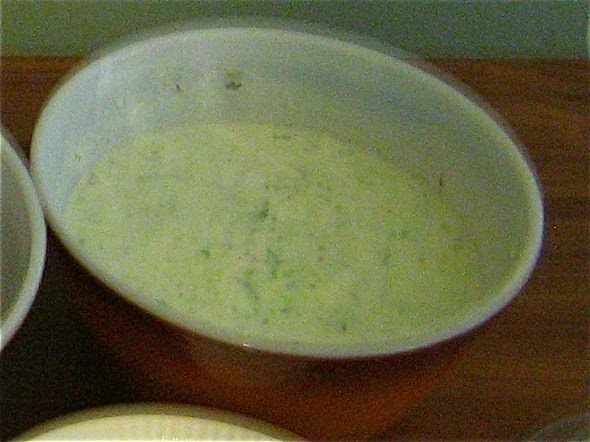
Cucumber Raita with Parsley

This is so easy and so refreshing. You need to start with a very good yogurt to make it well, though. I love Pinehedge 3.8% yogurt. A litre of this stuff comes in a glass bottle on which you pay a $1 deposit, making it very affordable if you return the bottle. I love this farm. It's bio-dynamic, organic, and most of all, the yogurt is the best I have found.

...and I've tried a lot of different plain yogurts. Liberté Organic, Liberté Greek-Style, Mediterranean, Danone, Damafro, Olympic, Activia, Stoneyfield, BioBest, Astro, and anything from the fat-free versions to the 1%, 2%, 3%, 3.8% and higher. Seriously, I've tried them all. Some are better than others, and some are just awful, but this one - Pinehedge - is the best. They have a light version but you've just got to go for the 3.8% whole milk yogurt or kefir. If you want it thicker, more like a Greek yogurt, use a cheesecloth to drain off the whey. This junk that Liberté has now, the Greek-Style fat-free, is a joke. It's bitter, and yes, it's full of protein, but there is no flavour. It's like eating protein powder; some people do it, but they don't do it because it tastes good or they like it, like those ridiculous Activia commercials ("Some people eat for the flavour, some people eat it for what it does for them". Yeah, it eases your digestion, but so do all other probiotic yogurts, and this one certainly is not the best for you anyway, not having the most bacteria of all the probiotic yogurts out there. I digress).

Anyway, take a good yogurt and whisk at least 2 cups of it with a fork to get out any lumps. Then grate one large (or several small) cucumbers into a bowl along with a small handful of chopped parsley (or mint, or cilantro), a sprinkle of roasted cumin seeds (stick some whole cumin seeds in a small frying pan over medium heat for about 5 minutes, or until they start to become fragrant. Then grind them in a mortar and pestle, a blender, a coffee grinder or in a sealed bag, beating with something heavy), a small to slightly-less-small sprinkle of cayenne, 1/4 tsp salt (or skip it. You don't really need it if you have a good yogurt!), and some freshly ground black pepper. Then add it to the yogurt. You can stir as much or as little as you like, since it's really beautiful when everything is only sort of mixed in, or if you sprinkle it with the cayenne and parsley to garnish.
Sorry for the awful photos...

That's all. You can also skip any of the above ingredients. Often if I have an Indian meal I just pour some good yogurt on the side of the plate and eat it plain. The cumin, parsley, cayenne, and cucumber are extra. Goodness knows you don't really need the salt and pepper. That being said, the cucumber was actually really good grated. It's much better this way than chopped. I did it on a fine grate so it really integrated well with the yogurt and thickened it up. Then just cover and refrigerate.

Thursday, June 17, 2010

Chaat Masala

Just like garam masala, chaat masala is just a simple blend of spices ("masala" = spice blend, but "chaat" masala is intended specifically for use in "chaat" dishes). These snack bowls are sold at roadside stalls in India, and usually consist of deep-fried bread, dried yellow salty noodle-like things, tangy yogurt, sour/sweet tamarind chutney and coriander chutney - all much more delicious than it sounds. Sometimes there's potato involved, or chickpeas, but there's always chaat masala. Again, like garam masala, there are a few ingredients that always appear, like mango powder(!), but the recipe varies from person to person in amount and other ingredients. So if you don't have one of the ingredients (as long as it's not the mango powder, cumin or salt) you can probably leave it out. Also, like the garam masala, if you don't have a whole version of a spice, use the ground version, but don't roast it in the frying pan or it'll burn. Only whole spices go in the frying pan.

The version I made:
Whole Spices
3 tsp cumin seeds
1/2 tsp black peppercorns
1 tsp coriander seed
1/2 tsp whole fennel seed
a little, little bit of asafetida, grated (this you can still roast even though it's grated. Bigger grater pieces are optimal)
Ground Spices
4 tsp amchoor powder (dried mango powder. I'm thinking about adding it to my mango sorbet next time, to make it a little more intense...
1 tsp garam masala
1/2 tsp ground ginger
1 tbsp salt (the originally recipe called for black salt, which is apparently actually pink. I use Himalayan Crystal salt, which is also pink, but who knows if it's the same thing. Use whatever kind of salt you wish - black, pink, purple - the recipe is nondiscriminatory)
1/4 tsp ground dried mint
1/4 tsp cayenne
1/4 tsp paprika

Same directions as the garam masala: put all the whole spices (plus the grated asafetida) in a small frying pan over medium heat (no oil) and stir them from time to time until they brown and give off an aroma. The original recipe says until they give off a "delicious aroma", but that's awfully subjective. Then grind using your method of choice. Store in an airtight container...

...and dream of chaat.

Wednesday, June 16, 2010

Masala Puri

Spice is what you need when it's hot. The heat makes your body work to cool itself down. It's like turning your interior freezer to 'ON'. Indian food is the perfect balance of heat and less heat. Cool yogurt, fresh cucumbers, cooked beans and spices. Every spice for a different purpose, and sometimes every spice at once. Like here, with this masala puri recipe.

So with my very refreshing mint chutney I made this...
There's no actual puri bread here, since I had just made gluten-free bread (which is completely different. Puri is a slightly sweet flatbread and mine was a yeast bread, but I just put the masala on a bed of lettuce. There is potato in the dish anyway, so it's not lacking for carbohydrates. I mixed some of the chutney in and I served some on top as well, along with some thick yogurt (actually, kefir, but it's very similar). The sweetness of the dairy was perfect with the surprising sweetness of the masala.
Ingredients:
3 small (or 2 medium) potatoes (peeled, boiled and mashed coarsely, or roasted, peeled and mashed. I happened to have the oven turned on so I just threw the potatoes in whole, unseasoned, pricked them all over with a fork so they wouldn't explode, and stuck them directly on the oven bars for about 50 minutes. Just leave them until they're tender. Then peel off the skin once they cool. You can also boil them and then peel and mash the same way)

1/2 cup dried chickpeas (soaked in water for about 6-8 hrs, or overnight. Or you can cover them with 1 1/2 cups water, bring a pot of the chickpeas and water to a boil on the stove, boil 3 minutes, and then cover and let stand for an hour. OR just used canned, but the taste is not the same)

1 - big onion, chopped finely, but it doesn't have to be too precise unless you care about such things
1 tsp oil
1 tsp cumin seeds
3/4 tsp garam masala (home-made is best)
3/4 tsp chaat masala (again, home-made is best and recipe to come. Mmm...mango powder)
1 tsp tamarind paste or a lime-sized piece of tamarind pulp soaked in warm water for 30 minutes (I just left it in the water for about an hour. Then what you do is take the ball of tamarind and press it through a fine sieve. Then pulp that come out is what you want to use. Throw away the fibres that don't get pushed through)
1 tbsp brown sugar
1 tsp red chili powder
1/2 tsp turmeric
1/4 cup mint chutney
cilantro, for garnish
1 tomato, chopped into small pieces
salt to taste

So you need to cook the chickpeas. If you just did the quick soak method with the whole 'letting it sit for an hour after boiling for 3 minutes' thing, you now need to drain the chickpeas, rinse them in cold water to wash off some of the starch that gets stuck on them, and then put them back in the pot with about 3 cups of water. Bring THAT to a boil, cover, reduce the heat, and let the chickpeas simmer for 80 minutes. I got away with 65 minutes, but my bean bible says 80. It's your digestive tract, though, so do what you will.

When the beans are done, just drain them away and rinse again. Yes, you are allowed to just use canned chickpeas, but trust me, it's just not the same. There'll be a starchy, slightly acidic taste and they won't be as nutty and sweet as fresh beans will be. They really should taste a bit like tahini (sesame paste) for hummous, but without adding any. Anyway, enough about chickpeas. The can is easy and convenient (thus, North American), but the fresh method is more delicious (thus, Indian. Though I know lots of Indian-Canadians who cheat).

Heat the oil in a big pot over medium-high heat, and when it's hot add the cumin seeds. Don't spread the oil around. Keep it in one area of the pot and then add the seeds directly to the oil. It infuses the oil better this way without adding heaps of it.

Now add the onion, and stir and cook for about 5 minutes, or until the onion is soft. I under-cooked my onion (again! I always do this by accident, since there's not as much oil as there could be) so test it and make sure it's not still crunchy before going on to the next step. It'll ruin the final texture of the dish.

Now add the chickpeas and the boiled and mashed potato. You want to do the whole boiling or roasting and mashing thing in advance since you don't want to be waiting for it to cook and then burn yourself peeling it while it's still hot. Preferably do this while the chickpeas are cooking. Even smarter would be to use leftover potatoes (unseasoned!!! Sour cream and butter have no place in this recipe).

Now, I don't know what a "bhaaji consistency" is, but you're now supposed to add enough water to the pot to create one of these elusive things. Apparently I need to make more bhaaji. This is obviously what I'm doing wrong with my life. I just added enough so that everything got smooth and easy to mix, and then added a bit extra because the recipe recommended erring on the side of slightly soupy. So add about a cup of water. Up to 1 1/2 cups.

Now add the garam masala, the chaat masala, the sieved tamarind, brown sugar, mint chutney (more or less a 1/4 cup, to taste), the red chili powder, and turmeric, bring to a boil, and cook for a few minutes. If the mixture gets too dry, add more water. "Too dry" means "annoying to stir". It's easy to boil off excess water at the end, but not easy to fix the recipe if you burn it now. Also, since I undercooked my chickpeas in the first place I thought it would be fine to add more water now to help them along.

Now add a pinch or so of salt and adjust the other seasonings according to taste. Whatever that means. I've never made this before, or eaten it, so have no idea what it's "supposed" to taste like. If you like the taste, leave it as is. If not, add some more of something that has a flavour you think you might want more of, like more brown sugar if it's not sweet enough, more mint chutney if it needs more herbal freshness, or more tamarind for intense sour. The brown sugar makes this spicy and sweet, which is just wonderful, and all the spices in the garam masala and chaat masala make this a sensory overload for your tongue. I don't remember the last time my taste buds didn't know what hit them, like they did with this dish. "Red wine sauce" this, "olive oil and lemon and dijon" that - these are all well and good, but these fresh Indian spices...wow.

To serve this, either take crackers (or real puri bread. Crackers are no comparison, but serve for a good crunch replacement in a fix), or serve as I did with a bed of lettuce. Spoon some of the chickpea mixture on top and then sprinkle with some of the chopped tomato and cilantro. You can add some of the extra mint chutney and yogurt directly on top, or serve it on the side, or not at all. Really, the chickpea and potato mixture is great on its own, or just with bread, and doesn't need anything else to make it a delicious meal. The lettuce, tomatoes, yogurt and extra mint are all overkill, but they'll send you into Indian heaven. Well, I mean, it's a bit more complicated than that, what with all the "Hare Krishnas" if you're Hindu and other complicated issues if you're Seekh or Muslim, but the gist is you'll be pretty happy with your dinner. In the end, isn't that what we all want out of life?

Tuesday, June 15, 2010

Mint Chutney

Can you see the red chili pieces? My blender got a good work-out on all these masalas and chutneys. The green would have been a better colour if my cilantro and mint had been fresh and not frozen, but how often do I really use a whole bunch of mint? There are only so many juleps that I can drink, thanks Beppi.

Ingredients (everything is approximate. It is Indian food, after all):
2 tbsp mint
1/2 cup cilantro
1 tsp garlic, roughly chopped
1 1/2 tbsp ginger, roughly chopped
1 green chili, seeds removed, roughly chopped
2 tbsp chopped tomatoes
1 1/2 tbsp pomegranate seeds (you can find these are Indian grocery stores. Buy the whole seeds, not the ground powder, since it'll last longer and it's not like you'll be using these every day)
3/8 cup (3 oz) water (hurray for my Newfoundland shot glass!)
1 1/2 tbsp cumin powder
1 tsp chaat masala (you can buy this pre-made, but it's MUCH better to make your own, like I did)
pinch of salt

Stick everything in the blender. That's all. Oh, turn ON the blender...

You only need to roughly chop everything roughly in advance if your blender or food processor isn't very strong. It just helps it along a little, and makes sure you don't end up with any clumps. Do the basic things, like make sure you wash the cilantro and mint, and remove the skin from the garlic. Remove the end bits (the bottom and the stem) from the green chili. Also preferably use a long thin green chili instead of a jalapeno. It's a little bit of a different flavour. A trick for peeling ginger is to scrape it with a spoon. A kitchen peeler will take away too much of the actual ginger and can't navigate the gnobby root. Oh, and if you don't like your chutney as fine and smooth, use a lower setting or a DICE setting on your food processor. Or if you REALLY want you can chop everything by hand, but that seems ridiculous in an age of blenders.
I had to mix some of this directly into a chickpea masala, so I didn't add yogurt, but you could if you serve it as a kind of raita on the side of a plate, or on top of a papri, like above.

Serve with anything - bread, crackers, spicy food, lentils, yogurt, beans, meats (especially lamb), vegetables. It ranges from mild to hot, and as long as you don't add too much salt, it doesn't over-power anything. Mmm...


Sunday, June 13, 2010

So Many Spices...

I wanted to use my pomegranate seeds. I've had an air-tight box of pomegranate seeds sitting in my cupboard for a few months now, waiting to be made into a delicious Indian meal, along with my mango powder. Unfortunately, Madhur Jaffrey doesn't have a single recipe in her "Indian Cooking" using pomegranate. Maybe one with mango (amchoor powder). Maybe.

So I googled, and then I went and bought green chilies and tomatoes. That and eggplant were all I needed to make chaat masala for masala puri, garam masala (because I used the last of my first garam masala to make the chaat masala) for baigan bhartha (my favourite eggplant dish ever, that kind of came out as a delicious mix between the best tomato sauce ever, bruschetta, and Indian ratatouille), mint chutney (because I had mint and what DOESN'T mint chutney go with? What it does go with is my first Sancerre bottle of white wine that I finally opened), and calamari curry (because it's the only affordable fish at that God-forsaken Poissonerie Atwater. I got the same woman again, the one I fought with about bellyfish, and she started off calling me "ma belle" again, and then remembered me. It went downhill from there...but she DID give me just the 1 1/2 lbs of squid I asked for. No tricks to get me to buy 2 lbs. Apparently even mean people can learn their lessons.

I would have bought these things at the Verdun Fermer's Market that I biked to today, but it wasn't open yet. Poor reporting in the Montreal Mirror, it seems. No, not really. They said it would be open in "June" so I can't really blame them. The article was really lovely.

Anyway, needless to say, I'm exhausted, and importing photos is time-consuming. So until then, use your imagination. Layers of chickpeas with home-made bread, tomatoes, cumin, nutmeg, turmeric, coriander, cloves, cinnamon, mango, pomegranate, asafoetida, fennel, star anise, ginger, garlic, chili powder, cayenne, salt, paprika, sugar, black pepper, and "curry" (oh, internet...curry is a spice blend, not a spice...though I suppose it could have meant curry leaves which are a real, single thing). This is the list of spices. Ridiculous, I know, and I didn't have to buy a single one of them. I left out lovage because it was optional, and used regular cumin when it called for black cumin seed once. All in all, a very efficient use of my spice cupboard, and oh, the flavour...pomegranate and mango are wonderful. My tongue is still spinning from the overload. The heat of the chilies! Mmm...just enough for me. 5 in total. A little bit of mango sorbet when I got over-heated from the hot liquid of the squid. Absolutely divine. 5 hours of cooking distraction from life. Can someone please pay me to do this?

"Will adjust chili heat for money"...or under duress.

Sunday, June 6, 2010

Indian Spicy Green Beans (Masaledar Sem): Madhur Jaffrey's "Indian Cooking"

It's funny, I took all these pictures are at different points in the cooking process and they all look exactly the same...I don't know if that's good because the beans never got to the point where they looked over-cooked, or if that's bad because there's some freakish genetic modification made to the green bean plant to make it stay green even when North Americans over-cook it (or stew it, like what's called for in Indian dishes).

This is a good recipe for fresh green beans. When green beans are not so fresh and they taste chewy and waxy it's not so spectacular. Still, it's not bad, and it's very healthy, so if you're looking for a side dish of green with a non-creamy sauce, this is a good choice.
Normally I'd never make a side dish with this many ingredients. Vegetables should be relatively simple, but this one is mostly spices, so it's the blend of these spices that's important. So I took the extra time and did it perfectly. When I ate it I couldn't figure out how it was so hot. It tasted like there were five or so chili peppers in it, but there was only one. There was no cayenne powder, no flakes, and no fresh ones, so it took me a long time to come to the conclusion that a hunk of ginger is very spicy indeed.

The most time consuming part of this is actually chopping the ends off the beans. You then need to cut them into half-centimetre pieces. Do this and toss them in a bowl for when you need them. Then move along with your life/recipe.

1 1/2lbs green beans, cut as above
a "thumb-and-a-half"-sized piece of ginger (my words, not Jaffrey's), cut into a few pieces
10 cloves of garlic (so maybe this is kind of labour intensive too, but oh so very good for you. You won't even end up with garlic breath, don't worry)
1 cup water (Jaffrey says 1 1/2 cups but you just boil it away at the end and over-cook the beans in the process. So start with 1 cup and see if you need more)
2 tsp oil
2 tsp cumin seeds (plus 1 tsp roasted, crushed cumin seeds, like the corn and potato recipe)
1 dried red chili (a small one, not a big one like a poblano, a New Mexican, or any of those South American chilies)
2 tsp ground coriander (grind your own fresh if you can)
2 medium tomatoes, peeled and diced (if you don't peel them it hurts the texture but it may also make the flavour more bitter. I'm not 100% sure on that. I didn't care about the texture so I skipped the peeling step. If you want to peel them the simplest way is to stick them in boiling water on the stove for just a few minutes until their skin begins to break, like lacerations. Then remove them with a slotted spoon and plunge them into cold water, or place them in a colander and rinse with cold water until they're cool enough to handle. Do not drain the boiling water! The skins should peel easily through the lacerations. If they don't, stick them back into the boiling water another minute or so. If you drained the water, you're screwed, and have to wait for more water to boil. Waiting for water to boil is a horrible way to spend a life).
1 tsp salt (max)
3 tbsp lemon juice (I think this is too much, but it depends on your lemons, so taste and it and see for your yourself before you add all three tbsps)
freshly ground black pepper (optional)

A lot of Thai recipes call for you to do this to start: put the ginger and garlic in a blender and process to create a paste. Getting the paste out of the blender can be a trial if there's not enough water, so make sure you add 1/2 cup of the water and do it just before you heat the oil in the next step so all the solid parts of the paste don't have a chance to sink to the bottom of the blender and get stuck. Have all your spices and ingredients ready to go.

Here we go!

Put the 2 tsp oil in a big pot over medium heat. When it's hot, tilt the pot to the side so all the oil collects in one spot. Then add the un-roasted cumin seeds only to the collection of oil. Count to 5 and put in the chilies. You need the pot to be directly on the heat, so you can tilt the pot back down, or even place it back directly on the burner, but use your spatula to keep all the oil and spices together. The spices need the oil to cook but this way you can save yourself about 2 tbsp worth of oil in the dish since you don't need to coat the whole pan to cook the spices.

Now add the crush chili pepper, count to 6, and put in the ginger-garlic paste. Stir and cook about a minute. Keep stirring so the paste doesn't burn since you skimped on oil.

Add the coriander, count to 7, and add the chopped tomatoes. Stir and cook for 2 minutes and mash the tomato against the side of the dish. Some thai dishes add the tomato to the garlic-ginger paste, and since you're mashing the tomato now I might try this next time. I don't see an advantage to not cooking the tomato a few minutes extra from putting it in earlier. They don't get quite as mashed this way compared with purée-ing, so there's a different texture, but purée-ing might be interesting and less soupy, both of which are good things).
Now add the beans, salt and remaining 1/2 cup of water. Bring to a simmer, cover, and reduce heat to medium-low for about 8 minutes. The beans should be almost tender.

Remove the lid and boil away any excess liquid. Rejoice.

Corn and Potatoes With Mustard Seeds and Mint (Bhutta aur Aloo ke Mazedar Tarkari)

Not the best Indian recipe ever, but it was probably my corn's fault. That or my tomatoes. This could be a very acidic dish or a very sweet one, so it's worth another shot in corn season. I'd also really appreciate someone else trying it and letting me know how it goes. I love a recipe that tells you to make it as hot as you can stand. That's what Madhur Jaffrey says to do here. Hurray.

oil
black mustard seeds
cumin seeds
garlic clove, diced
Some potato(es), boiled and cut into small cubes
1 or 2 diced tomatoes
fresh cilantro, diced
fresh mint, diced
1 hot green chili (I used a red one. Maybe that's why it wasn't as great as it should have been?)
2 cups fresh or frozen corn kernels (make this recipe with frozen for convenience and fresh if you've got some spare time on your hands...)
3 oz coconut milk (I used almond milk so it wasn't as thick and creamy. Maybe also why it wasn't so great. Use a shot glass to get the 3 oz. I'm a Newfoundlander and so I had a 3 oz shot glass hanging around...if you're not lucky enough to be from Newfoundland you will have to add a few shots together. Don't worry, it's just coconut milk...not coconut rum)
1/2 tsp salt
large pinch of cayenne
1 tbsp lemon juice (this felt like too much)
fresh ground pepper
2 tsp roasted and then ground cumin seeds (stick them in a frying pan over medium heat until they start to have an aroma, then remove from heat to an electric coffee grinder or mortar and pestle, and grind. Optionally put them in a paper or plastic bag, close the opening of the bag, and smash with something large...)

So first you want to boil the potato. You need to peel them afterward but you don't need to do it in advance. If you boil them until they're soft (this depends on how big they are) and then rinse them in cold water their skins tend to peel more easily, I've found. If you peel in advance I think you lose some nutrients. You can also chop them in quarters to boil them faster, but then it's harder to peel and you lose nutrients. Not much harder, though. So it's your choice.

While they're boiling chop everything else and have it and all the spices measured and ready to go. This recipe goes fast.

All that are left to chop are the boiled, drained and skinned and potatoes, so do that and then heat a good few tbsp of oil in a large skillet on medium-high (Normally I would never use this much but you need it all to give the potatoes a nice crispy exterior. If you don't mind mushy potatoes don't use so much oil, but it really makes a difference). When hot, put in the mustard seeds and a big pinch of un-roasted cumin seeds. When the mustard seeds start to pop put in the garlic and potatoes. Stir for a few minutes and then add the tomato (or tomatoes, if they're small), cilantro, mint and green chili (You can use a fair bit of each fresh spice. A good handful of fresh leaves of each). Two minutes later add the corn.

Stir until the herbs are mixed through the corn and then add the coconut milk (or almond milk. To make the almond milk thicker like coconut milk you could also put 6 oz of it in a saucepan over medium-high heat and let some of the water evaporate out of it until you have only 3 oz left. This just concentrates the flavour. Voila, evaporated milk. You can also just use water instead of coconut milk or almond milk, but again, not the same. Like the difference between sorbet and ice cream, it's a big one. Not necessarily bad, and sometimes you want sorbet and sometimes you want ice cream, but it's your choice and there'll probably be more flavour overall with the coconut milk). Also add the salt, cayenne and lemon juice now. I didn't know it was okay to add lemon juice this early in a recipe since it's so pungent and I think it's loses its pungency if you cook it for so long, but maybe that's the intention here??
Bring the skillet to a simmer. This should just take a few seconds, but turn up the heat if it doesn't happen soon. Then reduce the heat to medium-low, cover the skillet, and let it simmer for 3 minutes. Don't overcook the corn. You just want to heat it through. If the corn is really fresh it probably only needs about 2 minutes max.

While this is cooking put the 2 remaining teaspoons of cumin seeds in a small frying pan over medium-high heat (don't use any oil) and cook them until they're fragrant and slightly browned, just a few minutes. Then grind them. If you don't have a convenient grinding device like a coffee grinder, make sure you don't save this step until this late in the dinner game. Your corn will over-cook while you're fussing with a plastic bag and mallet of some kind.

Now uncover the skillet, grind some black pepper over top along with the roasted and ground cumin seeds. Stir. Serve. Voila side dish.

Thursday, June 3, 2010

Affordable Taste: An Indian Dinner of "Dry" Moong Dal

A food friend once told me that in his opinion the only vegetarian food in the world worth eating is Indian. I don't fully agree. I do hate tofu and soy of all kinds, but there are a whole lot of other good vegetarian food options out there, even if North American vegetarian restaurants tend to disagree (I'm looking at you "Fresh" in Toronto and "Aux Vivres" in Montreal). There's Ethiopian, Mexican, South American, French, and Italian, to name a few prime examples, but I understand my friend's point. Meat (fat) gives flavour. It's easy to make a meal with meat delicious without doing too much. Vegetable oil and other kinds of oils just aren't as naturally delicious as meat fat, so vegetarian food has to work a little harder. Indian food (very similar to Ethiopian) brilliantly uses complicated blends of spices to flavour otherwise dull things (lentils and beans). Even so, using the same spices to flavour meat is astronomically better.

Like eating out every day, though, eating meat at every meal because it tastes better is just not sustainable, both financially and physically. Your body needs a respite from time to time. Look at cultures that involve traditional fasting. All sorts of religions incorporate a set period when the body can clean itself out, either by restricting times of the day you can eat, or what you can eat. The same goes for the spices in food. It's all traditional. People who make the food that way may not know why certain spices go together, but they sure know it tastes good and it's healthy for them. Who cares if ginger is good for the immune system so a hunk of it goes in Vietnamese soup? Meat is a treat, and maybe people would eat more of it if they could afford to do so, but not every body is designed to function at its peak that way. Everything in moderation? Unless you're a monk, or a vegan...

Anyway, my point is that if you just think Indian is the only good vegetarian food out there, you're limiting yourself. Ethiopian, for example, is very similar, using slightly different spices in the same way. Coincidentally (or not) there was a large migration from India to East Africa (mainly Kenya) to build railroads and I'm not sure who brought what spices where, or where traditions originated, but the end result is delicious. Chile peppers, turmeric, fenugreek, cardamom, cloves, cinnamon (have you ever seen a cinnamon tree? You want to lick the bark), and most importantly, salt. Nothing against a perfect batch of baked beans, corn and squash tamales, or a traditional vegetable minestrone or fresh pasta, but Indians and Ethiopians got this whole spice thing figured out.

With that in mind, I made a healthy dinner. I generally don't make a bunch of Indian dishes in one night because it's labour intensive. Instead I'll make make one the first night, the next night I'll make another and eat it with leftovers from the first night, and maybe the third night I'll make another and put all the items together for a true Indian meal. Here's what I made: "Dry" Moong Dal ("Sookhi" Moong Dal), Corn and Potatoes with Mustard Seeds and Mint (Bhutta aur aloo ki mazedar tarkari), Gluten-Free Bread (to replace naan, since the dry dal was supposed to be served with bread, not rice) and raita (plain, thick yogurt to help digest the lentils with the bread. Complete protein and all).

I find lentils boring on their own, but the little bit of sugar in the bread made them absolutely savoury and delicious. Naan would also work perfectly, and on the third day I had the lentils with some leftover kulcha (like a naan, but yeast-free. Not lactose-free) from an Indian restaurant I'd gone to in Parc Extension, Indian Maison Curry House.

The dal is a really easy recipe.1 cup moong dal (this is not moong dal above...I used these green lentils instead. It's a different taste, but definitely not a bad one)
About 5 cups of water, divided
1 tsp ground coriander
1 tsp ground cumin
1/4 tsp turmeric
1/4 tsp cayenne (never skimp on this...)
2 tsp oil (...or this...)
1/2 tsp salt (...or this, in the case of lentils, since they're bland enough already)
1 tbsp oil or ghee
1/2 tsp cumin seeds
1 dried red chili

Wash the dal like you would rice, in several changes of water. For real moong dal you're supposed to soak it for 3 hours, but these lentils don't need to be pre-soaked for so long, so just stick them in 4 cups of water until you need them later in the recipe. Drain them before adding them below. If you skip this step and the lentils don't absorb enough water, you'll just need to add more later to make sure they cook fully.

Combine the 1st four spices (up to the cayenne) along with a tbsp of water in a small cup.

Heat the first amount of oil over medium in a large pot and when it's hot put in the spice mixture. See, you don't need a lot of oil because the spices have water mixed in. It will be harder for you to burn them. Stir the spices for a second (for once the recipe doesn't say something like "For 5 seconds". It just says "Stir once", which I think is still hilarious. What if I accidentally stir twice? and what constitutes a stir?) then add drained dal. Stir and then add a cup of water. Bring the mixture to a boil and reduce the heat to very low, cover the pot and let it simmer for 15 minutes. Depending on your type of dal and whether or not you soaked it long enough you may need to cook it longer or add more water. Just make sure it always stays at a simmer but doesn't start to stick to the bottom of the pot. "Very" low can also be misleading and end up causing you to wait more than patiently for your lentils to cook.

Now the fun part.

Just before you're ready to eat (aka the dal is tender, "dry" or not too liquidy, and not sticking to the pot) heat the remaining oil or ghee in a small frying pan over high heat. You want this to be VERY hot oil so don't use olive oil. The heat is necessary to extract as much flavour as possible from the spices. You're basically going to create spiced oil and use it as a seasoning.

So add the cumin seeds to the hot oil. Count to 3.

Add the hot chili. Count to 3 again. It should puff up and darken. If not, just count to 3 and get on with your life/recipe.

Now pour the oil, cumin seeds and chili right over the pot of dal and stir it in. You can also place the dal on individual serving plates and pour a small amount of the spiced oil over each portion as a garnish, or just place the whole pot of dal with the oil on top on the table and serve family-style. I recommend mixing it in, though, because it lets the spices blend, so you don't end up with some people having bland bowls of dal and some having spiced ones. You can also fry some very thinly sliced onions in a few tablespoons of oil on medium-high until they're crispy and browned, drain them on paper towels, and serve them on top.

Serve with some kind of flatbread (or my gluten-free bread, or anything that isn't a piece of whole wheat, comes in a bag, or is sandwich bread. This is not a French meal) and some yogurt to help the digestion. Mango for dessert? I got 14 at Jean-Talon and biked them home. Soon I will start a series called "What did Amie bike home from Jean-Talon this week?". Half a watermelon, 14 mangos, 5 oranges, 4 peaches, 2 bunches of asparagus, a bag of lettuce, and a canteloupe. Thank you Leonardo's. If only you were at Atwater.

Wednesday, May 26, 2010

5 Minute Moong Dal With Red Lentils and Browned Onions

Not the cooking time (5 minutes), but the writing time.

and, GO!

Okay, so this is a simple recipe for lentils. I basically had no other protein in my house and had to figure out something nourishing and comforting. For me, that means dal. I have no idea what kind of dal I actually used. I only used one even though the recipe called for two. It was black and a small lentil but if it was actually moong dal like the recipe wanted, I have no clue. Still, the recipe worked fine and my tummy was happy, and will yours, probably. All tummies are different, after all.

1 cup dal (some kind of lentil - red, black...specifically moong dal is called for, so if you can find it)
1 cup split red lentils
5 cups water
1/2 tsp turmeric
1 1/4 tsp salt
2 tbsp oil
pinch of ground asafetida
1 tsp fennel seeds
4 dried hot red chilies
1 small onion, very finely sliced into rings

Five minutes are up, I lose. I'll be back!

Okay, I'm back.

Moong dal, continued:

So I love fried onions. I hate onion rings even though they're almost the same thing but not breaded. You get this intense onion flavour that you either love or hate, but your tongue gets to go swimming in oil since you essentially just deep-fryed the slices. I think I first got into them when someone I knew told me their favourite dish was biryani and they tried it at every restaurant they could find, the best in downtown Toronto being found at Quick Pita on College for awhile. That didn't include Little India on Gerrard Street, but for convenience sake, Quick Pita was pretty good, apparently. Anyway, they're the garnish for this dish, which makes it a little more gourmet than simple boiled lentils.

First, wash the lentils. Put them in a bowl and wash them like rice. Actually, you need to start the rice about the same time (or before) you start washing the dal. That way the rice can soak and the grains will stay separate.

After a few changes of water to clean the dal, drain them and put them in a big pot. Add the water and turmeric. Turmeric will take away some of the effect of beans on your digestive system ("Beans, beans, good for the heart..." etc.). Bring the dal to a simmer (don't let it boil over) and then reduce the heat, cover it but leave it "slightly ajar" (this is apparently the traditional way to cook lentils - partially covered) and let the dal simmer softly for about 45 minutes. It shouldn't completely fall apart, but it should be tender. If you don't use moong dal and red lentils, whatever you use may cook faster or slower. If you don't use lentils at all but you use beans instead, make sure you soak the beans overnight and then cook them. Lentils are split (like "split peas") and don't need to be soaked. They're the convenient legume, but it's all relative. 45 minutes is not exactly quick cooking. Unlike rice, you're allowed to stir the dal a few times while it's cooking, and when it's done you season right away with the salt, stir, and then leave covered over low heat if you don't have the next step already done while you were waiting for the lentils to cook.

All that's left is to heat the oil over high heat, and do some very quick, hot sauté-ing. This makes lots of noise, and looks really flashy, so if you have people over, they can watch in the kitchen and you'll look like a culinary superstar. Take that, Nigella.

When the oil's hot put in the pinch of asafetida, (be carefully of hot flying oil) count to 1 (yes, 1) and then add the fennel seeds. Count to 3 and then add the red chiles. Count to 4 and then add the onions. What happened to 2? Shouldn't you have to count to 2 somewhere? Then it would be called 1-2-3-4 frying. 1-3-4 is not as catchy, but traditional foods are not meant to be catchy, I suppose. They're probably just meant to be practical. So skip counting to 2. It's an unnecessary number and a waste of 2 seconds of your life.

Stir, stir, stir and reduce the heat to medium-high until the onions are very brown and crisp. They'll look like you really over-cooked them, but they'll taste great. If they really start to look like they're blackening or burning, turn the heat down a little more. Now pour everything from the frying pan into the dal that's set on low waiting for you patiently. You want to pour all the oil in too, not just the onions and spices. There may not be a whole lot of oil leftover, but you really need the fat of the oil in this to help digest the lentils. Otherwise there's about zero grams of fat and you'll never feel full and you'll have an awful time digesting, despite your use of turmeric. Actually I even drained the lentils after cooking them (before adding the salt) and added more turmeric, just to get more starch out of the water that had come out of the lentils while they cooked.

Serve on a bed of beautiful basmati rice that you've maybe even timed correctly to have finished just now and pour a little bit of yogurt on the side of the plate. The dairy actually helps turn the rice and lentils into a full protein! Ah, the miracles of Indian cooking. So sorry vegans, your protein will be incomplete, but your tongue will be happy from beautiful fried onions and oil.

Tuesday, May 18, 2010

Seasonal Cooking: Spring Spot Prawns with Fiddleheads and Peas

The Atwater Market and Jean Talon have exploded. That means it's Spring. When the flower vendors come in and the fresh fruit and vegetable sections expand to four times their normal size I get really excited. The downside of the new consumer obsession with eating locally and seasonally is that whatever's in season tends to be really expensive when it first hits the market. That's why I avoided buying fiddleheads. They went from an item nobody wanted, and nobody certainly knew how to cook, to a highly prized delicacy. Like wild leeks. Wild leek pesto seems so generic to me now. Soon Martha Stewart will be carrying a line of it, I'm sure.

I meant to wait until the end of each vegetable's season to buy it, so that the prices would reduce, but I caved. This last week I saw fiddleheads at the market and after comparison shopping a few different places, I bought them from Michaca Farms at a decent $5 a bag. I think it was asparagus' fault, since I'd avoided buying those until I found them VERY reasonably priced at the McGill Organic Campus tent on rue McTavish north of Sherbrooke on Tuesday last week. When I tasted them, and compared them to the organic ones I'd actually found fairly reasonably priced at Jean-Talon, I remembered how beautiful it was to eat in Spring. They were sweet and mild and you didn't even need to crack off the bottoms they were so fresh. Once I had fresh Spring produce, I needed more, and that meant fiddleheads.

I planned to make them very simply, using a basic Indian spicing of asafetida, onions, mustard seeds, garlic and cayenne, and salt, but I forgot I'd also bought some pois mange-tout (the kind of peas you where you can eat the whole pea...what's the word in English? It's not sugar-snap), and then I'd seen some sept-iles (local Quebec) spot prawns on for incredibly cheap (less than $6 a pound) and tried to buy a pound but the man gave me 2. That was fine...

The plan was to make quasi-sushi with them since I had leftover sushi rice, but in the end the photo above is what happened: Indian-Spiced Prawns with Fiddleheads and Peas. Somewhere between a shrimp stir-fry and an Indian shrimp saag (since the spicing originally came from a saag recipe) the dish was so, so good, and good for me. The only annoying part was shelling the prawns. You don't get a whole lot of meat off one of those guys, but you get tons of shells for making shrimp stock!!! I now have 4L of stock in my freezer waiting for my next soup or sauce. I love Spring. Did I mention that?

Fiddleheads need to be cooked twice. If you eat them raw they're toxic. So blanch them first and then cook them however you want (boil, steam, blanch again, stir-fry, grill, etc). So I threw them in boiling water for 3 minutes and then drained them and rinsed them under cold water. They have a lot of loose green threads that kind of fall off. It looks like they're pretty dirty, but it's just threads falling everywhere. Give them a good rinse before and after blanching and they'll be fine.

Then stir-fry. I heated a bit of oil (you can use anywhere from a teaspoon to 3 tablespoons. If you use more you won't need to be as diligent about stirring or adding water to keep it from burning, but you up the fat a lot) on high heat (this is a high-heat stir-fry, not medium-high, or medium, so be careful not to use olive oil or another oil that burns).

When the oil got hot in my large pot, I added the grated asafetida and then the mustard seeds "a few seconds later". When they started to pop (another "few seconds"...oh, Madhur Jaffrey) I added the onion that I had sliced finely and some minced garlic.

Stir, stir stir. The onions were going to burn a little, so I added a tiny bit of water to keep that from happening. They get soft this way, not crispy but I still like the flavour. It's more important to cook them through than to undercook them by not adding more liquid. 2 minutes later I added the fiddleheads and peas, and two minutes after that I added a pinch of cayenne, 1/2 cup of water, 1/4 tsp salt, and my spot prawns. They don't need much time at all; 2 minutes, max. If they're over-cooked they taste like rubber. What I didn't realize was that they're salt water prawns, so I didn't need to add any salt to the recipe. Still, the extra didn't make the dish less delicious. Madhur Jaffrey's recipes are often heavy on salt and cutting out a little (except in the lentil and bean dishes) is usually fine.

The picture isn't amazing, I know, and I think the peas were on the end of their shelf life. I'd been saving them for too long probably. That's the thing about fresh, good food - it doesn't last. You need to eat it right away. No holding back or delayed gratification. The food necessitates immediate satisfaction. Long live Spring, though I know, like the produce, it won't, and I will just have to take advantage of it while I can.

Saturday, March 27, 2010

Jhinga Aur Ghia (Shrimp with Zucchini): Madhur Jaffrey's "Indian Cooking"

This was the last dish I prepared as part of the huge Indian meal I made for friends last week.

This whole meal looked like this:

(plus the yogurt and tomato relish), and here's everything put together into one rainbow of a plate:


Chicken curry, yogurt, tomato relish, split pea dal, basmati rice, aloo saag, yam saag, and shrimp with zucchini. A feast.

The shrimp were huge! We used US Gulf White Shrimp. All the other options were black tiger shrimp and other smaller shrimp from Thailand, and my sustainable seafood online reference says that's bad...it doesn't say US Gulf are necessarily good...in fact, I didn't have enough information from my fish place in St. Lawrence, Domenico's Fish Market, to make that call. They were the most expensive, though, which often means they could be better (or just over-priced), since it often costs more to fish sustainably. Good quality anything usually costs more. In this case, 'good quality' is a bit ambiguous because I don't know which of the shrimp were wild or farmed, what was added to or left out of the water, and with what they were fed. Basically, making a eco-conscious choice with seafood is often next to impossible.

So at least the shrimp were big and juicy and looked fresh.

Ingredients
5 zucchini, cut into matchsticks
1 tbsp salt (I skimped on the salt, thinking that the salt on the shrimp and in the canned tomatoes would make up for it. Wrong. Use the whole tablespoon. A sixth of the salt is used to suck the excess moisture out of the zucchini, so it's not a flavour issue in this case. It's a consistency issue. Your zucchini will stay firmer and not dissolve into the sauce. The rest of the salt is essential if you use low-sodium tomatoes like I did. Otherwise you might get away with skimping)
1 1/2 lbs shrimp (fresh or frozen. If frozen, defrost them and dry them with paper towels)
3 tbsp oil
12(!) cloves of garlic, finely chopped
2 cups(!) cilantro leaves (In this recipe cilantro is used as a vegetable and as a main part of the dish, not a garnish. Removing the stems is a nuisance, but is very necessary. Sorry)
2 hot green chili peppers, finely chopped (More Hari Mirch "Indian" chilis)
1 tsp turmeric
1 tbsp cumin (I roasted cumin seed and then crushed it...poorly...again)
1/2 tsp cayenne
6 small canned tomatoes, finely chopped, plus 1 cup of tomato liquid from the can
2 tsp finely grated ginger (I just diced it. No grater in my brother's house either)
2 tbsp lemon juice

I used San Marzano tomatoes because I'm obsessed with them. They're Italian. Meant for pasta sauces, not Indian cooking...they're very low in sodium and sweeter than most canned tomatoes. I figured it would work well in this recipe...I'm not sure if I am so stubbornly convinced that's true any more. The tomato liquid will give the majority of the flavour to the dish, so if the sauce is no good, then the tomatoes you used are no good. Well, they're just no good for THIS recipe. I still think San Marzanos are the gods of tomatoes, but just not in Indian dishes that need an acidic kick. I may have also just used too much tomato juice from the can...I didn't measure precisely since this was the last dish and I was rushing. Never, never, never rush Indian cooking. Have you ever seen an Indian woman rush? Much like a French women. Nothing like me.

Slow food. It's a movement. A slow, slow movement toward the stove, most likely. Like a conversation with a mime...it takes a long, long time.

So I rushed the tomato-pouring. All my fault.

Here's how to do this recipe properly:
1. Put the zucchini in a bowl and toss them with a 1/2 tsp salt. Toss it together and set the bowl aside while you chop everything else.
2. When everything else is prepped (chopped, measured, put in bowls, etc) add the oil (all of it. It'll seem like a lot of oil...) to a large frying pan over medium-high heat. When it's hot, add the garlic and stir until the garlic turns a medium brown. You're basically deep-frying the garlic.
3. Drain the zucchini and pat them dry with paper towels while the garlic browns (take a 30 second break from stirring near the beginning of the garlic cooking to do this)
4. Return to stirring the garlic and when it's the right brown colour (at your discretion...) add the zucchini and all the other ingredients except the lemon juice. Remember to add the rest of the salt.
5. Bring the mix to a simmer and add 2/3rds of the lemon juice and all the shrimp (You don't want to add all the lemon juice just in case your tomatoes are very acidic. Madhur Jaffrey and I disagree on this point, apparently. You can always add more lemon, which is really pungent when added at the end, but you can never take any out)
6. Cover the frying pan, turn the heat to low and simmer for 3 minutes, until the shrimp turn pretty in pink.
7. Remove the cover and boil away the excess liquid. You should have a thick sauce. If it's too soupy you'll be disappointed with the flavour. Boiling away the liquid concentrates the flavour.
8. Now you're allowed to add the rest of the lemon juice if you need to. Add it until you're happy with the flavour. Also add more salt if you need to. Again, tomato-dependent.

My version was...in my opinion, bland. The shrimp were beautiful and tender, but they were overpowered by the tomato sauce. I often think with shrimp stir-fries that sauce-less is the best way to cook them. The zucchini in this recipe need a sauce, though. I just don't think tomato and zucchini go together very well. Same deal with asparagus (which you could substitute in this recipe if you either prefer asparagus or just don't believe me). Maybe I should have reduced my sauce a little more? Maybe I should have moved tai chi-slow? Next time I'm so lucky to have amazing shrimp, they will be treated with more respect (aka no tomato sauces).

Then the most important part, setting out all the food, making sure it's at the right temperature (this is done in advance, of course), making sure there are cutlery and plates (again, advance) and getting the serving started. Oh I'm so happy with this meal. Even if I found it generally underwhelming in terms of individual dishes, together the total sum of dishes (colours, flavours, textures, ingredients) was still a lot for the senses to process, making for an impressive meal.